
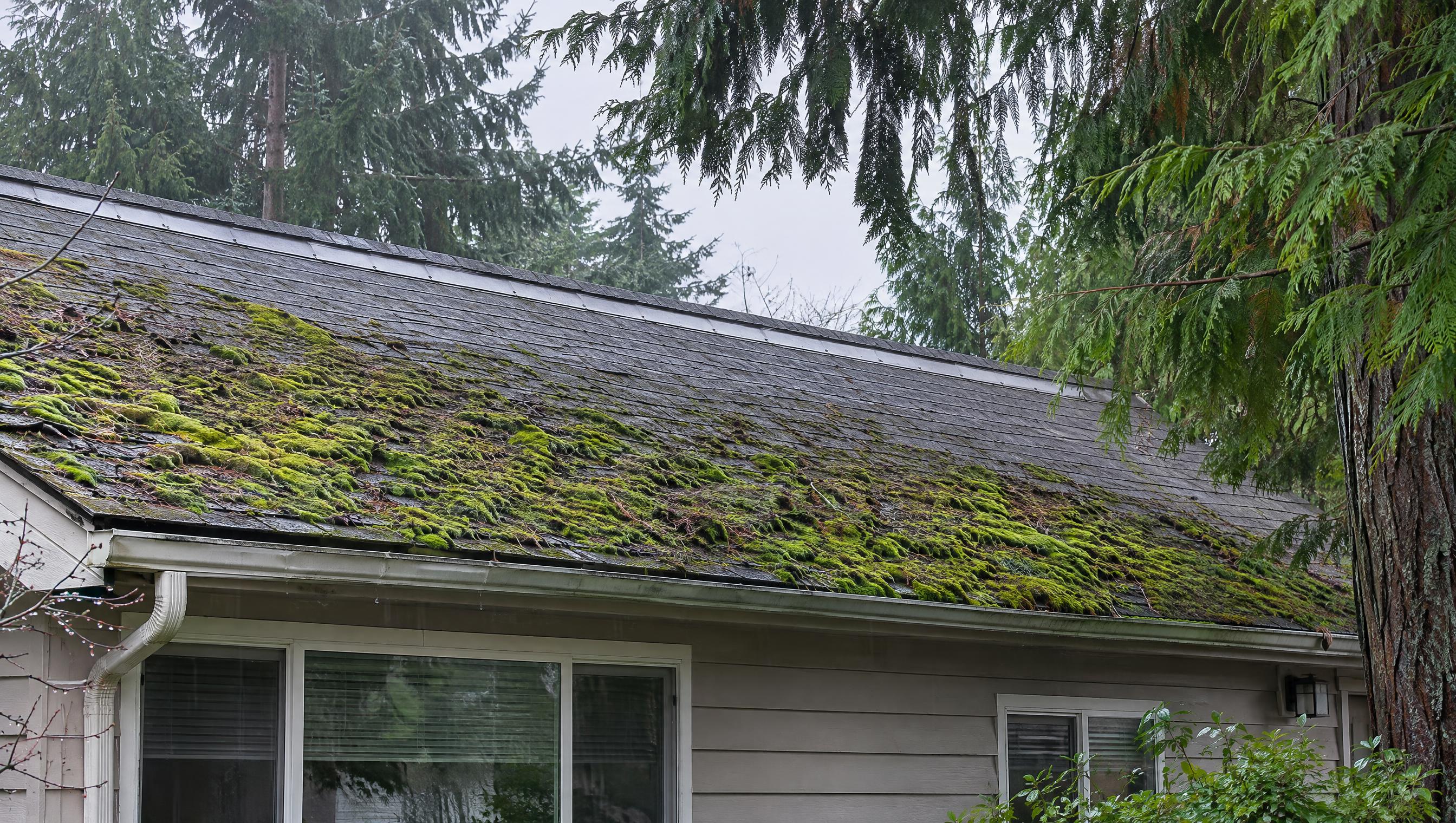
Zinc strips for roof moss can slow down new growth on a roof that’s already clean, but they won’t get rid of moss that’s already there. They also protect the shingles just below the strip far better than the rest of the roof. In a place as wet and shady as Olympia, they work best as a backup to a proper moss treatment, not a replacement for one.
If your roof is already green, the first step is getting the moss off. Our roof moss removal service in Olympia kills moss, algae and lichen without pressure washing the shingles. Here’s what zinc and copper strips can and can’t do, and how to handle moss yourself safely.
Why does moss grow so well on Thurston County roofs?
It comes down to rain, shade and a long, cool wet season. Olympia gets around 50 inches of rain a year, most of it between October and April, and the tall firs and cedars around so many homes keep roofs from drying out between storms.
North-facing slopes and anything under a tree get it worst. Fir needles that pile up in the valleys hold even more moisture, and once moss takes hold it acts like a sponge that keeps the roof wet long after the rain stops.
Do zinc strips for roof moss actually work?
Yes, up to a point. A zinc strip is a thin band of metal nailed along the ridge of the roof. Every time it rains, water picks up a tiny amount of zinc and carries it down the shingles, which makes the surface a poor place for moss to grow.
The catch is that the effect is strongest right below the strip and fades the farther the water runs. On a short, simple roof that can be enough. On a long slope, the lower part of the roof often grows moss anyway, which is why some installers add a second row partway down. Anything that blocks the runoff, like a chimney, skylight or dormer, leaves a patch behind it where moss can still grow.
Strips also do much less against moss that’s already established, because the runoff flows under and around thick clumps. The roof needs to be clean first.
Are copper strips better than zinc?
Copper is harder on moss than zinc, but it costs more, and some homeowners don’t love the look of shiny copper on the ridge. Both metals share the same limits: they protect the area just below them best, need rain to work and won’t clear existing growth.
Zinc and copper are also harmful to fish and other aquatic life, and roof runoff ends up in local creeks, Budd Inlet and Puget Sound. If your downspouts drain toward the water, that’s worth weighing before you line the ridge with metal.
How long do zinc strips take to work?
On a clean roof, strips start working with the first good rain and help keep new moss from taking hold. On a roof that already has moss, results are slow and patchy. Some may die back near the ridge over a season or two, but the thick moss lower down usually stays put.
That’s why the order matters. Treat the moss first, give the weather 3 to 6 months to wash the dead moss away, and then add strips if you want extra help keeping it off.
Can I remove roof moss myself without damaging the shingles?
You can, as long as you’re careful and the roof is safe to work on. A few rules will keep you from doing more harm than good:
- Don’t pressure wash. The Asphalt Roofing Manufacturers Association warns that high-pressure washing is likely to damage asphalt shingles by stripping off the granules that protect them.
- Use a soft bristle brush and work from the top down, so you’re brushing with the shingles instead of lifting their edges.
- Use a moss killer made for roofs and follow the label exactly. Protect the plants below and keep pets inside while you work.
- Pick a stretch of dry weather so the treatment has time to work before the next rain.
- Stay off a wet, mossy roof if you can. It’s slippery, and even a fall from a single-story roof can cause serious injuries. Work from a ladder instead.
Don’t expect the roof to look clean the same day. Dead moss turns white or brown and lets go over the following months as the rain washes it off. A lot of it will land in your gutters, so plan on gutter cleaning once the roof has cleared up.
When should I call a pro?
Get help if your roof is steep or two stories, if the moss is thick enough to hide the shingles, or if shingles are lifting along their bottom edges. The same goes if you’d rather not be on a ladder in December.
Zach’s Power Washing soft washes roofs with a treatment that kills moss, algae and lichen, with no pressure or water flow on the shingles. The moss turns white soon after it’s treated and washes away over the next 3 to 6 months, and we guarantee no moss regrowth for 2 years. If you’re not sure your roof is worth the effort, our post on whether roof cleaning is worth it walks through how to tell. For algae streaks and lichen, take a look at our roof cleaning in Olympia page.
So, do zinc strips stop roof moss?
They help, but they won’t stop it on their own. In Western Washington the best results come from getting the roof clean first and checking it each fall. Strips can stretch out the time between treatments, but they aren’t a fix for a roof that’s already green.
Zach’s Power Washing removes roof moss throughout Olympia, Lacey, Tumwater and Thurston County. Call 360-915-3282, Monday to Saturday from 9 am to 5 pm, or get a quote online and tell us what you’re seeing on your roof.


